> For the complete documentation index, see [llms.txt](https://guide.hardfin.com/llms.txt). Markdown versions of documentation pages are available by appending `.md` to page URLs; this page is available as [Markdown](https://guide.hardfin.com/manage-your-account/organization.md).
# Organization
An **organization** is the business that is signed up with the Hardfin platform. If you are using single-sign-on (SSO) through Google or Microsoft, anyone with an authorized account in your organization can authenticate as part of your Hardfin organization.
{% hint style="info" %}
**Understand user relationships**
An **organization** is usually *associated* with many **accounts**, which correspond to all the users in that organization. (Note: a single user account can belong to only one organization.)
{% endhint %}
## View account details
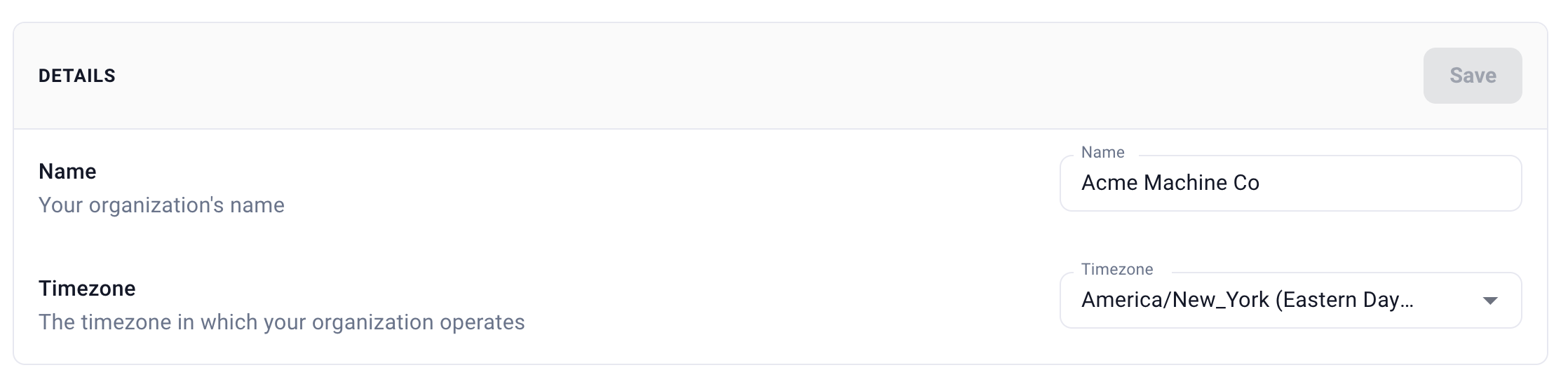
To see your account details, navigate to the [organization page](https://assets.hardfin.com/organization). Here you will see a table with basic details such as your organization's name and time zone.
Organization details
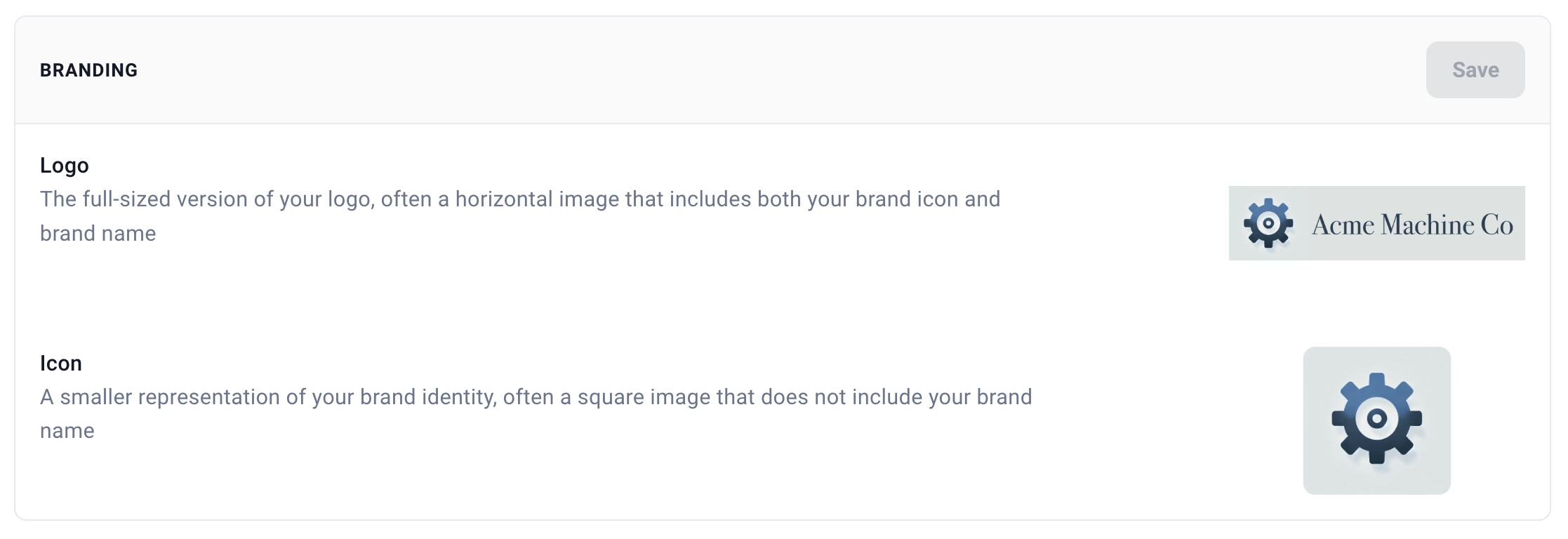
You can also configure branding details such as your organizational **logo** and **icon**.
Organization branding
### Asset marker
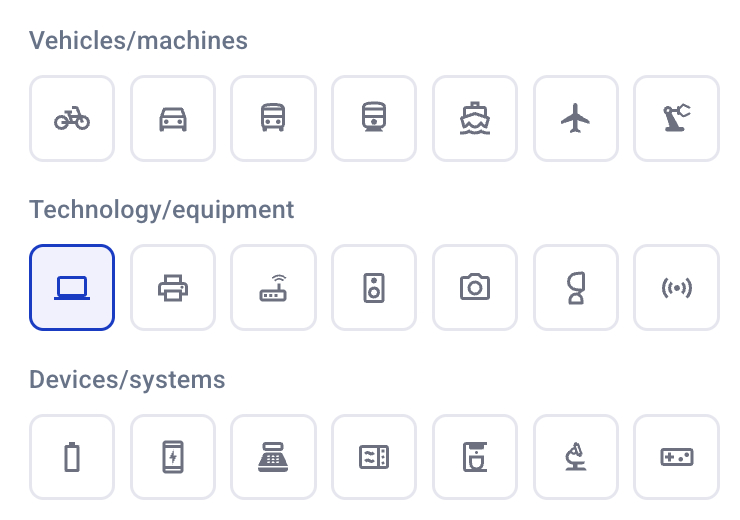
Organizations can customize the **marker** that represents your assets throughout the Hardfin platform in search bars, asset pages, and location maps. Select from a library of device icons. This asset marker allows you to choose a symbol that best represent your specific asset types and align with your brand identity.
Asset markers for different device/equipment types
To configure your asset marker, navigate to the organization branding section and select the **Marker** subsection. Choose the marker that best represents your fleet from the available library.
## Custom notifications
**Custom notifications** allow an organization to include external stakeholders in project communications without granting them system access. From the organization page you can configure custom notifications. [Learn more about custom notifications in Hardfin.](/manage-your-account/organization/custom-notifications.md)
## Project workflows
**Project workflows** help organizations track and manage the stages of each projects from start to completion. You can define project workflows on the organization settings page. [Learn more about project workflows in Hardfin.](/run-your-business/projects/manage-project-workflows.md)
## Ledger account configuration
**Ledger accounts** allow your organization to map Hardfin's asset tracking to your ERP's chart of accounts. This configuration enables automated journal entry generation and seamless integration with your accounting system.
From the organization settings page, you can configure 11 default ledger account mappings:
**Inventory accounts:**
* Inventory - Main inventory asset account
* Inventory clearing - Goods received not invoiced (GRNI) clearing account
* Cost of goods sold - Expense account for inventory sold or consumed
* Inventory write-off - Expense account for inventory losses or disposals
**Fixed asset accounts:**
* Fixed assets - Main fixed asset account
* Capitalized deployment - Costs capitalized during asset deployment
* Depreciation - Depreciation expense account
* Accumulated depreciation - Contra-asset account for accumulated depreciation
* Disposal clearing - Clearing account for asset disposals
* Disposal gain - Income account for gains on asset sales
* Disposal loss - Expense account for losses on asset sales
These mappings are typically configured once during initial setup and used for monthly financial reporting. Changes to ledger accounts are tracked in the organization audit log.
{% hint style="info" %}
Ledger account configuration is designed for finance teams and system administrators. These settings determine how Hardfin generates journal entries for your accounting system.
{% endhint %}
## Organization users
Organization **users** are people that are members of your organization. From the organization page you can view users, and organization administrators can make updates. [Learn more about user management in Hardfin.](/manage-your-account/organization/user-management.md)
## View audit and deletion logs
A full **audit log** is also available with a history of organization-related actions, including new user accounts. A separate **deletion log** includes details of records that have been deleted from your account. Read [more about audit logs](/monitor-the-details/audit-log.md) in Hardfin.