> For the complete documentation index, see [llms.txt](https://guide.hardfin.com/llms.txt). Markdown versions of documentation pages are available by appending `.md` to page URLs; this page is available as [Markdown](https://guide.hardfin.com/run-your-business/assets/scrapping-assets-at-end-of-life.md).
# Scrap assets at end of life
Assets are **scrapped** at the end of their life, most often when an asset has been disposed, dismantled, destroyed, or lost. Scrapped assets are not expected to return to service, although they may be dismantled and have their parts repurposed as part of other finished goods.
Once scrapped, you cannot assign an asset to a project, and cannot update its status from "Scrapped." All other features (asset moves, description, metadata, etc) continue to be available.
Scrapped assets no longer appear in your asset list or your inventory and field reports, but they continue to be visible in project history and timelines where those assets were in service. All past information about scrapped assets will be preserved—so any data for an asset between its inventory date until its scrap date will continue to be reflected correctly in historical reporting.
### Scrap an asset
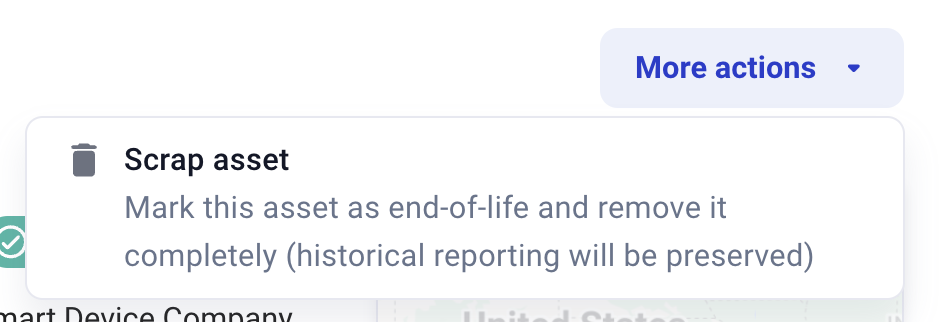
You can **scrap** an asset under the *More actions* menu at the top right of the asset details page, or scrap multiple assets at once via CSV upload.
#### Scrap individual assets
To scrap a single asset, use the *More actions* menu:
Scrap asset menu
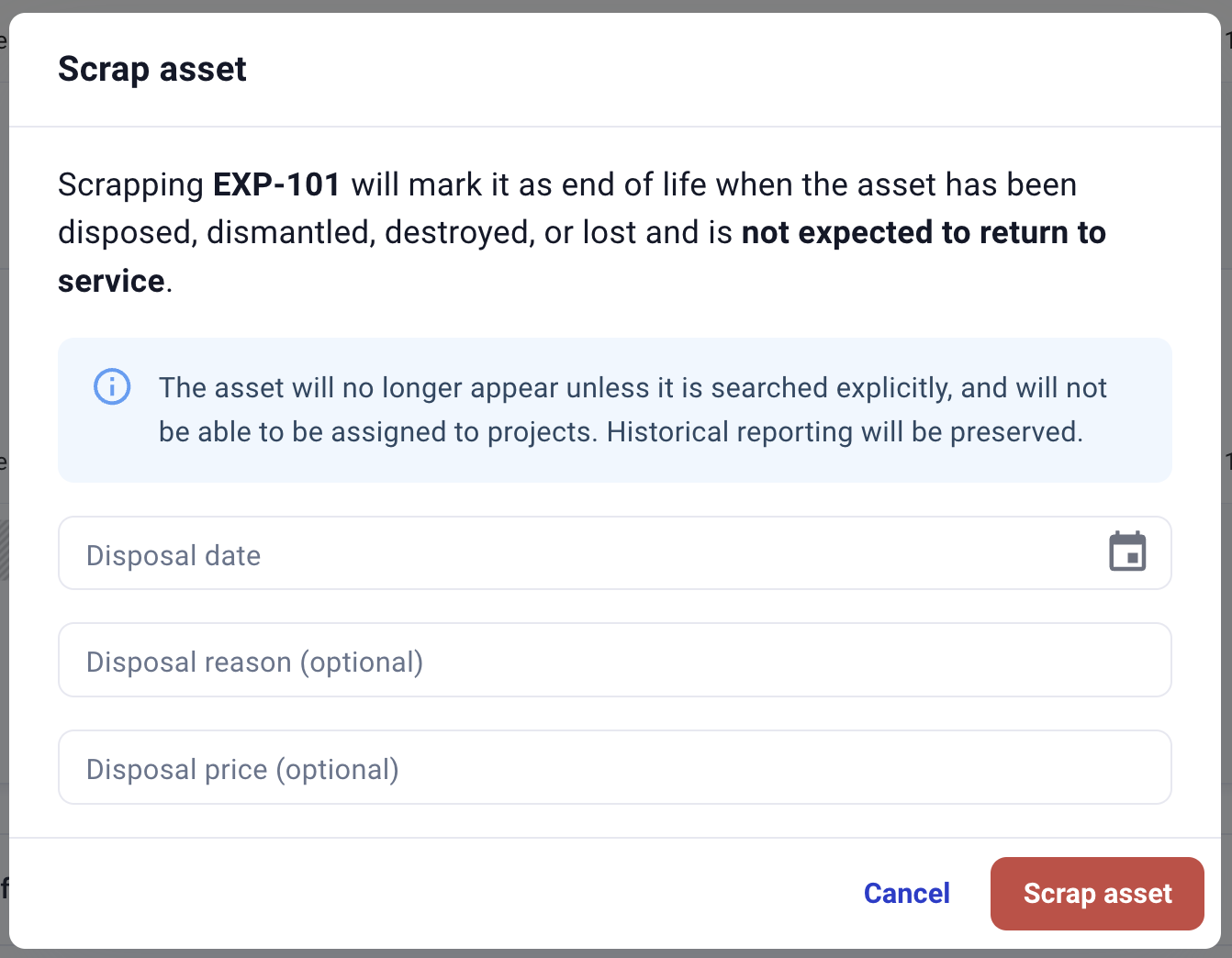
Because scrapping an asset removes it completely from the core Hardfin experience, it should be used only when an asset is going out of service permanently. Scrapping the asset requires a **disposal date** for when the asset should be designated as scrapped in your historical reporting. For audit purposes, you can also provide a *disposal reason*. And for accounting purposes, you can also provide a *disposal price* in order to calculate gain or loss on disposal*.*
Asset scrap window
{% hint style="info" %}
Note: the option to enter a *disposal price* will not appear if the asset has already been sold to a customer.
{% endhint %}
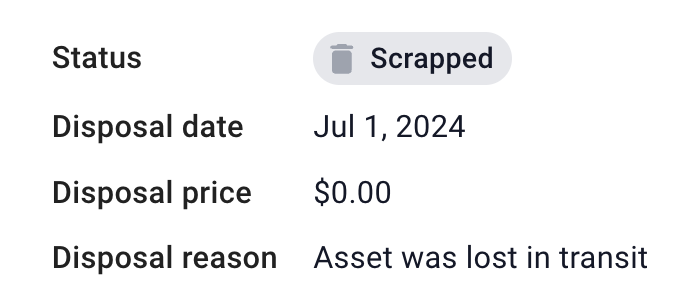
Once scrapped, the details are shown at the top of the asset page:
Scrapped asset status details
#### Scrap assets in bulk via CSV
To scrap multiple assets at once, use the "Update existing assets" option in the asset data uploader. Include the scrap information (disposal date, disposal reason, and optionally disposal price) in your CSV file along with the asset serial numbers. This allows you to efficiently retire multiple assets in a single upload.
### Cancel asset scrap (unscrap an asset)
Although scrapping an asset is intended to be a permanent change, the Hardfin platform *does* permit you to **unscrap** an asset in order to restore it to service. This usually means that the asset was scrapped accidentally. For example, an asset was thought to be lost and thus was scrapped; but the asset was subsequently found and needs to return to service.
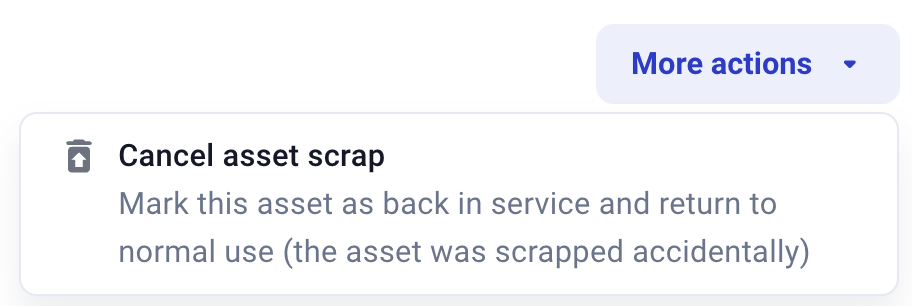
Once an asset has been scrapped, the scrapped can be **cancelled** from the *More actions* menu at the top right of the asset details page:
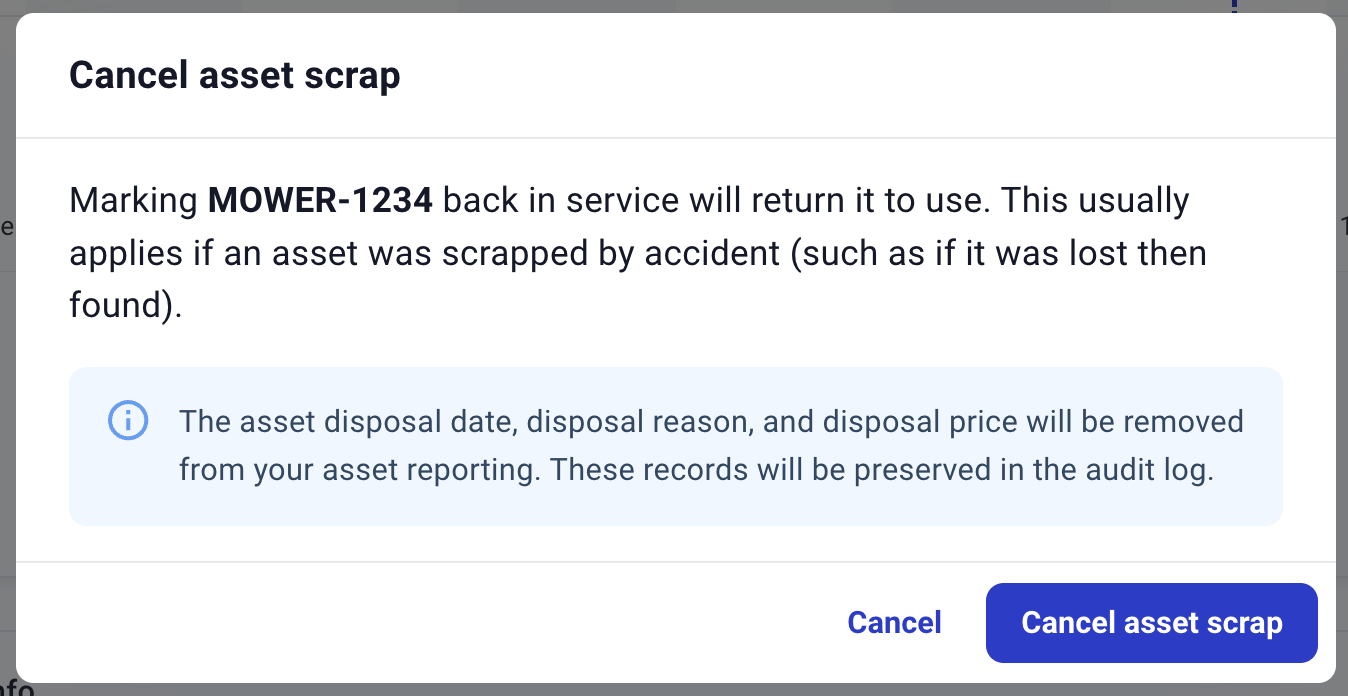
Because cancelling an asset scrap is unusual, the system will ask you to confirm your intentions:
Cancel asset scrap window
Once an asset scrap is canceled, the disposal date, disposal reason, and disposal price (if given) are all reset. The history of the initial scrap and the cancellation are preserved in your audit log.